
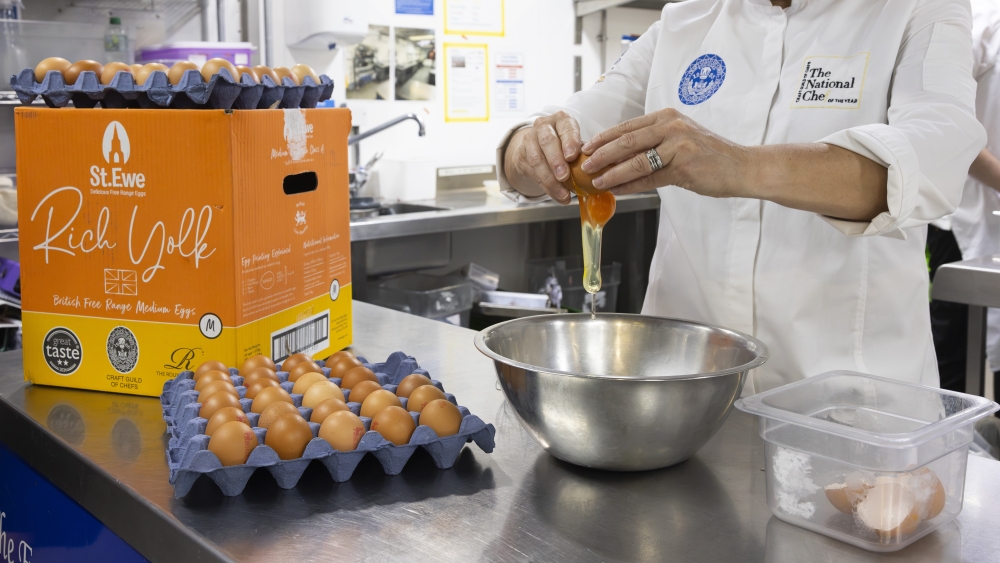
Eggs may be one of the most familiar ingredients in the kitchen, but for chefs operating at the highest level, there is nothing ordinary about them. From perfectly poached breakfast dishes and fresh pasta to refined pastry work and elevated menus, eggs are relied upon every day for their versatility, consistency and flavour. At St. Ewe Free Range Eggs, we know that quality matters, which is why we’re proud to work with chefs who share our commitment to exceptional ingredients and high welfare standards.
Following National Chef of the Year, we spoke with some of this year’s finalists to learn more about the role St. Ewe eggs play in their kitchens. Their answers reveal just how important this humble ingredient remains in modern professional cooking.
What Do Great Chefs Look for in a Great Egg?
Bryon Franklin, Executive Chef, Mark Poynton at Ancient Shepherds
“For me, it’s all about consistency, a lovely colour to the yolk and knowing the eggs have come from a farm with really high standards. When you’re working with something so often, you really notice the difference in quality.”
Nathan Cooper, Sous Chef, BaxterStorey
“For me consistency is the most important. Even though a bright yolk is stunning on a plate, the colour isn’t everything to me. And the flavour; having a nice rich egg yolk to help break up a beef tartare, or a poached egg in an eggs Benedict.”
Ruth Hansom, Owner & Chef, Hansom Restaurant
“When judging an egg, I think the colour of the yolk is always a good indication. A rich deep colour suggested that the hens have been fed well, and time and thought has gone into their diet. When this is consistently the case you know you’re buying from a place that doesn’t waiver in their values and practices. A thick shell can also show that they have had a nutrient dense diet, and means they aren’t so prone to breaking in transit!”
Why Does Egg Quality Matter in a Professional Kitchen?
Bryon Franklin, Executive Chef, Mark Poynton at Ancient Shepherds
“Eggs are such an important part of what we do in the kitchen. They’re incredibly versatile and feature throughout our menu, from the very first snack right through to the last bite. We probably use them in some form in at least half of our courses, so having a consistently good-quality product really matters.”
Nathan Cooper, Sous Chef, BaxterStorey
“It’s crucial as for us we want to supply the highest animal welfare eggs we can with the best product to the guest we serve. Taking pride in our food is something we love.”
Ruth Hansom, Owner & Chef, Hansom Restaurant
“Egg quality is so important in kitchens. For a lot of recipes, the egg is what is relied upon to rise, to emulsify and to thicken so ensuring they have enough protein is vital.”
Eggs Across The Menu
Whether appearing centre stage or playing a supporting role, eggs feature throughout the professional kitchen.
Bryon Franklin, Executive Chef, Mark Poynton at Ancient Shepherds
“We use eggs a lot, particularly in our desserts, from mousses to garnishes like tuiles and meringues, but they’re just as useful on the savoury side too. Sometimes they’re there to bring texture or richness to a dish and, on other occasions, we’ll let the egg take centre stage. That versatility is what makes them such a great ingredient to work with.”
Nathan Cooper, Sous Chef, BaxterStorey
“Eggs are all over our menus from on a classic breakfast such as eggs Benedict, to making house made pasta, and more complex pasta like an egg yolk ravioli.”
Ruth Hansom, Owner & Chef, Hansom Restaurant
“Eggs are used everywhere and across all dishes in my kitchen. To glaze, to make emulsions, pasta doughs, breads and cakes, custards and ice cream bases, the list is endless. They are such an important ingredient across sweet and savoury cooking.”
Did Eggs Feature in the NCOTY Final?
From technical preparations to final presentation, St. Ewe eggs played an important role in many finalists’ competition menus.
Nathan Cooper, Sous Chef, BaxterStorey
Used for: Velvet whipped mascarpone
Bryon Franklin, Executive Chef, Mark Poynton at Ancient Shepherds
Used for: Egg yolk in my Valrhona Manjari crémeux
Ruth Hansom, Owner & Chef, Hansom Restaurant
Used for: Egg white in a scallop mousse. Egg yolk for a lovage emulsion. The main course featured whole soft-boiled eggs to make a parsley emulsion and the dessert had egg yolks to make ice cream.
Quick-Fire: The Perfect Egg Dish Is…
Bryon Franklin, Executive Chef, Mark Poynton at Ancient Shepherds
“For me, the perfect egg dish is all about getting the texture just right, with a firm but tender white, a rich, runny yolk and flavours alongside it that complement the egg rather than overpower it.”
Nathan Cooper, Sous Chef, BaxterStorey
“A rich, smooth well-balanced plate. With something acidity like a pickle. But my favourite type always must be an egg yolk ravioli, the complexity and richness you get with a stunning St Ewe egg yolk, you just can’t beat it.”
Ruth Hansom, Owner & Chef, Hansom Restaurant
“The perfect egg dish always starts with the best quality egg. A simple omelette or scrambled egg can be the most satisfying thing when sourced and treated correctly.”
As these finalists demonstrate, great cooking often starts with great ingredients. Whether providing structure, richness, flavour or visual appeal, eggs remain one of the most versatile and valuable ingredients in the professional kitchen. At St. Ewe, we’re proud to support chefs who share our passion for quality, consistency and high welfare standards, and we’d like to congratulate all National Chef of the Year finalists on their outstanding achievements.
Looking to use high-quality British free-range eggs in your kitchen? Reach out to the St. Ewe team on: sales@stewe.co.uk or visit their website here.